The Vagus Nerve as a Bridge Between Stress Recovery and Social Connection
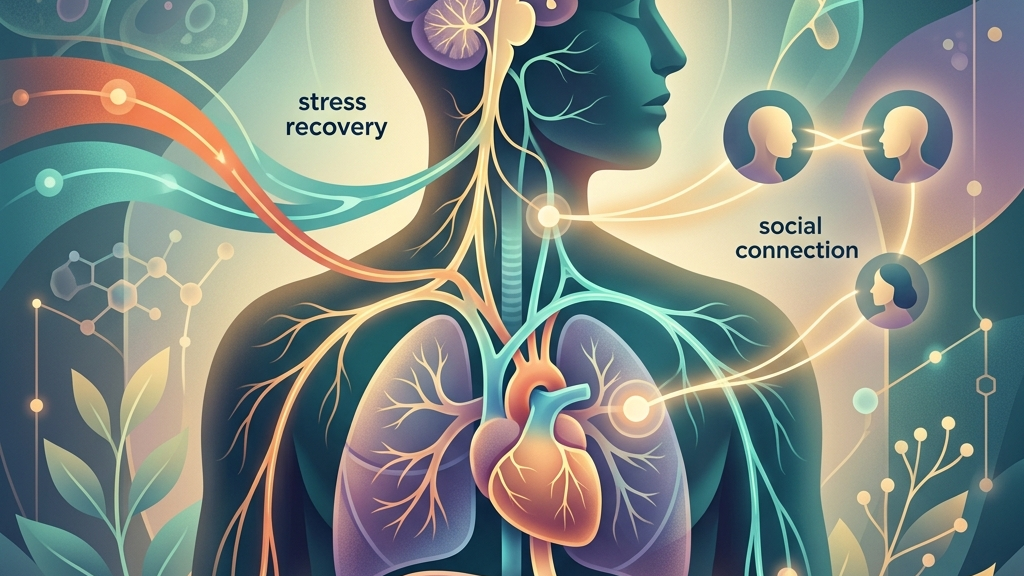
How the vagus nerve works
The vagus nerve is the tenth cranial nerve and the longest of the cranial nerves, carrying both sensory information from the body to the brainstem and motor signals outward to organs. Roughly eighty percent of its fibers are afferent, conveying data about organ status upward, while the remaining fibers carry parasympathetic commands that slow heart rate, promote digestive secretions, and support respiratory rhythm. This bidirectional traffic forms a major component of the parasympathetic nervous system, often described as the body’s primary “rest-and-digest” pathway.
Within the autonomic nervous system the vagus nerve supplies the main brake on heart rate via the sinoatrial node, an influence readily observed in measures of heart-rate variability. Higher variability at rest generally reflects stronger vagal modulation, allowing the heart to respond flexibly to changing internal and external demands. The same nerve also innervates smooth muscle in the lungs, esophagus, and intestines, coordinating peristalsis and influencing how nutrients and microbial metabolites are sensed and relayed back to the brain.
The gut-brain axis illustrates this traffic in action. Vagal sensory neurons in the intestinal wall detect mechanical stretch, chemical composition, and immune signals, then transmit that information through the nodose ganglia to brainstem nuclei. From there, ascending projections reach areas involved in interoception and emotion regulation, while descending vagal output can in turn modulate gut motility and inflammation. This loop helps explain why digestive comfort and mental clarity frequently shift together. Everyday observations often align with these mechanisms: after eating a balanced meal containing fiber-rich vegetables, some individuals notice both steadier energy and a subtle easing of mental tension within an hour, consistent with vagal afferents carrying nutrient-derived signals that influence brainstem nuclei regulating arousal. In contrast, when meals are rushed or high in processed ingredients, the same pathways may transmit less coherent information, leaving a lingering sense of internal distraction that competes with focused work.
Further nuance arises from the nerve’s branching pattern. The right and left vagal trunks descend asymmetrically, with the right branch exerting stronger influence over the cardiac pacemaker and the left contributing more prominently to gastrointestinal regulation. This distribution means that unilateral factors, such as neck tension from prolonged screen use on one side, can subtly bias signaling without producing overt symptoms. Over weeks, consistent attention to bilateral neck mobility during routine stretching may therefore support more balanced afferent traffic, though responses vary with individual anatomy and daily posture habits.
Supporting Recovery from Stress via Vagal Pathways
When sympathetic activation rises during stress, the vagus nerve provides a counterbalancing mechanism that can gradually restore slower heart rhythms, deeper breathing, and reduced muscle tension. This process depends on the nerve’s ability to release acetylcholine at cardiac and visceral targets, which dampens the effects of circulating catecholamines. Over time, repeated cycles of activation followed by vagal rebound appear to strengthen overall autonomic flexibility, a quality often indexed by resting heart-rate variability.
People commonly notice that after periods of sustained pressure they experience a gradual unwinding marked by easier exhalation, warmer extremities, and a return of appetite or bowel regularity. These shifts coincide with increased vagal outflow that slows cardiac pacemaker activity and promotes gastrointestinal motility. The same rebound can be observed in the tendency for heart rate to drop more readily during quiet exhalation once the immediate demand has passed. Consider a typical workday sequence: after an intense morning of deadlines, an individual might step outside for ten minutes of unhurried walking. The slight lengthening of each out-breath during this pause engages respiratory sinus arrhythmia, allowing vagal fibers to the sinoatrial node to exert greater influence and produce a measurable deceleration of heart rate by the time the person returns indoors.
Research on cardiac vagal tone further indicates that individuals with higher baseline variability tend to show faster return to resting physiological markers after laboratory stressors. This pattern suggests that the vagus nerve does not simply switch off stress responses but actively participates in their resolution by re-engaging parasympathetic dominance. Because the nerve also carries anti-inflammatory signals via the cholinergic anti-inflammatory pathway, its activity may additionally limit the lingering physiological effects of stress-related immune activation. In practical terms, this can appear as reduced muscle soreness or fewer tension headaches on evenings following consistent low-intensity movement rather than complete sedentary recovery.
The subjective experience of feeling “settled” after stress often tracks these physiological changes. When vagal tone is robust, the transition from alertness to calm is smoother; when it is reduced, recovery may feel prolonged or incomplete. This does not imply that vagal function alone determines stress outcomes, yet it highlights one measurable route through which the body regains equilibrium. For instance, parents managing evening routines after work sometimes observe that a brief period of humming along to music while preparing dinner coincides with both a softer voice when speaking to children and an earlier sense of bodily ease, reflecting acetylcholine-mediated effects on laryngeal tone and cardiac rhythm simultaneously.
Facilitating Connection Through Vagal Pathways
Beyond internal regulation, the vagus nerve contributes to the physiological platform that supports social engagement. Motor fibers innervate the larynx, pharynx, and facial muscles involved in voice prosody and expression, allowing subtle shifts in tone and facial warmth that signal safety to others. When vagal outflow is active, these muscles tend to remain supple rather than braced, facilitating the slight variations in pitch and facial micro-movements that accompany relaxed conversation.
Sensory branches also relay information from the viscera that can influence perceived emotional safety during interaction. A calm gastrointestinal state, partly maintained by vagal motor signals, reduces competing internal noise that might otherwise pull attention inward. This interoceptive quieting can make it easier to remain present with another person’s voice, gestures, and facial cues. In daily life this might manifest during a shared meal: when digestion proceeds without discomfort, participants often find themselves leaning slightly forward, maintaining eye contact longer, and responding with natural vocal inflections rather than clipped replies.
Polyvagal perspectives emphasize that the myelinated portion of the vagus, unique to mammals, evolved alongside social bonding behaviors. When this system is online, heart-rate variability rises in coordination with breathing, creating a physiological state compatible with sustained eye contact and reciprocal vocalization. Conversely, when vagal withdrawal occurs under threat, these same muscles can tense, flattening vocal tone and narrowing facial expressiveness—changes that others may unconsciously register as reduced approachability. Office colleagues, for example, may notice that after a team member returns from a short walk incorporating gentle diaphragmatic breathing, the ensuing discussion flows with more spontaneous laughter and overlapping speech turns, markers of coordinated vagal and social signaling.
Many people observe that after activities that gently stimulate vagal afferents, such as prolonged exhalation or vocalization, they feel more inclined toward low-stakes social contact. These shifts are not universal, yet they illustrate how the same nerve that aids internal recovery also participates in the bodily conditions that make connection feel accessible rather than effortful. Over successive days, pairing such activities with routine interactions—such as greeting neighbors while consciously softening the jaw—can gradually expand the range of contexts in which engagement feels natural.
What the research shows
Studies of heart-rate variability consistently link higher resting vagal tone to more efficient cardiovascular recovery after mental or physical challenge, as detailed in research on heart-rate variability and cardiac vagal tone. Complementary work on the gut-brain axis demonstrates that vagal sensory neurons convey microbial and metabolic signals that can modulate brainstem nuclei involved in arousal and mood, according to reviews of the vagus nerve as modulator of the brain–gut axis.
Direct examination of vagal sensory neurons reveals specialized endings in the intestinal mucosa that respond to nutrients and inflammatory mediators, providing a route by which gut state influences central autonomic balance; this anatomy is mapped in studies of vagal sensory neurons and gut–brain signaling. Clinical observations further associate vagus-nerve stimulation with changes in sleep architecture and breathing stability, reported in work on vagus nerve stimulation, sleep-disordered breathing, and sleep quality.
Anatomical descriptions confirm that the vagus supplies parasympathetic innervation to the heart, lungs, and gastrointestinal tract while carrying extensive sensory feedback, as summarized by Cleveland Clinic resources on vagus nerve function and location and NIH StatPearls on cranial nerve 10. Together these sources indicate that vagal activity participates in both the resolution of physiological stress and the maintenance of bodily states compatible with social engagement, although individual responses remain variable and context-dependent. Longitudinal tracking in community samples, for instance, shows that seasonal shifts in daylight exposure correlate with modest changes in resting heart-rate variability, underscoring how environmental rhythms interact with the same pathways described in laboratory settings.
Practical ways to support your vagus nerve
- Slow, extended exhales performed for a few minutes several times a day can increase vagal modulation of heart rate because lengthening the out-breath augments respiratory sinus arrhythmia.
- Humming or gentle gargling stimulates vagal motor fibers to the larynx and pharynx, providing a simple mechanical input that many people find calming after focused work.
- Brief, tolerable cold exposure such as cool water on the face or a short cool shower activates vagal afferents and can produce a measurable slowing of heart rate once the stimulus ends.
- Paced breathing at roughly six breaths per minute aligns with the natural resonance frequency of the cardiovascular system and tends to amplify heart-rate variability.
- Light, rhythmic movement such as walking or rocking supplies gentle visceral stimulation that travels along vagal pathways without requiring intense effort.
- Consistent morning light exposure and stable sleep timing help anchor circadian rhythms that in turn support autonomic balance, including vagal tone during rest.
When to talk to a professional
Persistent dizziness, unexplained fainting, severe swallowing difficulty, or sudden changes in voice lasting more than a few days merit prompt medical evaluation, as these can signal issues affecting cranial-nerve function. Likewise, chest pain, marked shortness of breath, or gastrointestinal bleeding require immediate professional assessment rather than self-directed exploration of vagal practices. Individuals living with diagnosed cardiac, respiratory, or neurological conditions should consult their clinician before introducing new breathing or cold-exposure routines, because even gentle stimuli can interact with existing medications or devices. In addition, when symptoms cluster with mood changes that interfere with daily responsibilities, a coordinated discussion with both primary-care and mental-health providers can clarify whether autonomic patterns form part of a broader clinical picture.
Common questions
How long does it take to notice changes in vagal tone?
Physiological shifts such as altered heart-rate variability can appear within minutes of certain breathing practices, yet more stable changes in resting tone typically develop over weeks of consistent daily input rather than from isolated sessions. Tracking simple markers like the ease of returning to baseline after climbing stairs can provide informal feedback on whether routines are accumulating effects over time.
Can vagal activity be measured at home?
Consumer heart-rate sensors paired with validated apps can estimate aspects of heart-rate variability, though these readings reflect multiple influences and should not replace clinical assessment when symptoms are present. Morning measurements taken under consistent conditions, such as seated rest before caffeine intake, tend to yield more comparable day-to-day values than sporadic readings.
Does posture affect vagal signaling?
Forward head position or chronic abdominal tension can mechanically influence vagal branches in the neck and thorax, so simple postural adjustments sometimes accompany other practices aimed at supporting vagal function. Periodic checks during desk work—such as gently drawing the chin back while keeping the gaze level—may reduce compression along cervical pathways without requiring dedicated exercise time.
Are there differences between individuals in vagal responsiveness?
Age, fitness level, breathing patterns, and prior stress exposure all contribute to variability in how readily the vagus nerve modulates heart rate and visceral organs, which is one reason responses to the same practice differ across people. Genetic factors influencing receptor density on cardiac tissue further contribute to this spectrum, suggesting that experimentation with timing and duration of practices often proves more informative than rigid adherence to a single protocol.
The vagus nerve offers one coherent physiological thread connecting the body’s return to baseline after stress with the capacity to engage with others from a place of relative calm. By attending to its signals through ordinary daily rhythms—breath, voice, movement, and rest—many people discover incremental shifts in how quickly they settle and how readily they connect. These observations remain invitations to curiosity rather than guarantees, and any persistent concerns are best explored with a qualified clinician.Have a question?
Have a question about something specific? Send us a message.
Visit VagusSkool.com/contact — we'll try to get back to you within 24 hours.